Skip to content

Refreshed. Balanced. Natural.
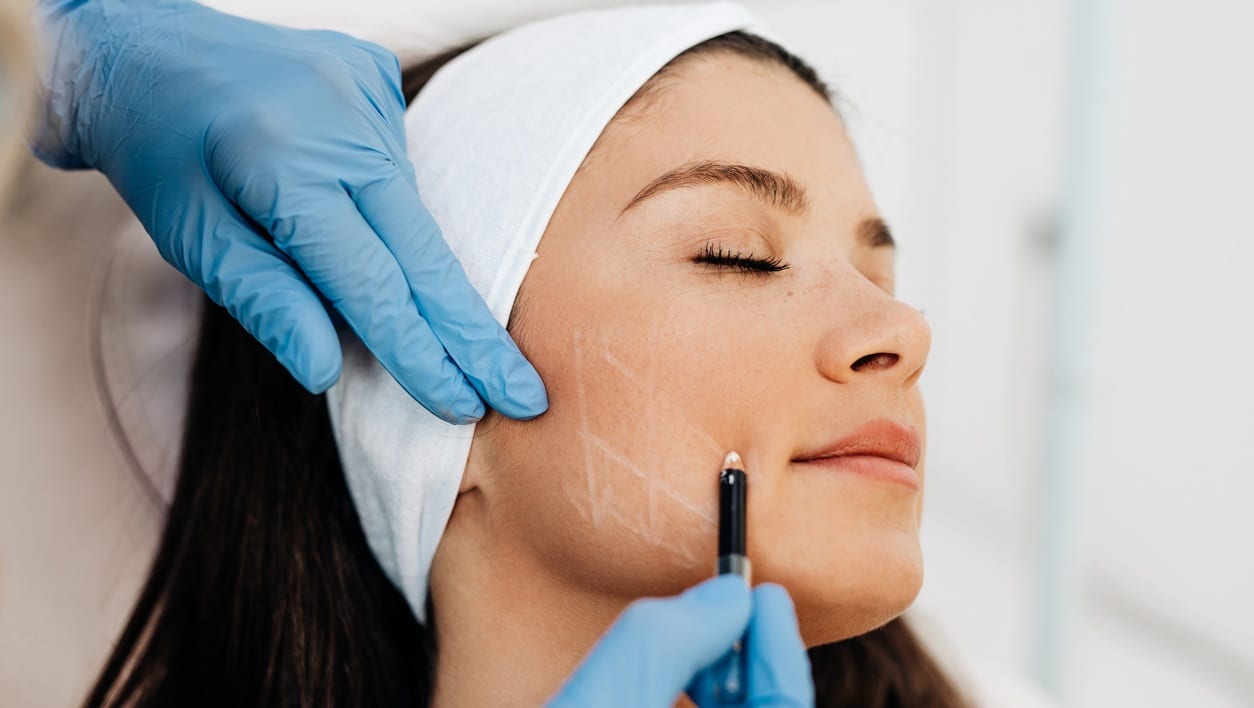
Facial fat grafting is an advanced technique for restoring facial volume that has been lost with aging. By carefully transferring a patient’s own fat from another area of the body to the face, facial fat grafting can soften hollows, restore youthful contours, and create a more refreshed, balanced, and natural appearance.
- Natural: Uses your own tissue
- Rejuvenation: Restore lost volume
- Regeneration: Potential skin-quality benefits
Facial Fat Grafting vs. Dermal Fillers
Both facial fat grafting and dermal fillers can restore volume, but they are fundamentally different treatments.
Facial Fat Grafting
Potential advantages include:
- Uses your own tissue (natural)
- Biocompatible: No foreign synthetic filler material
- Naturally integrates into your tissues
- Can provide very precise, three-dimensional volume restoration
- May have potential benefits to skin and tissue quality (regenerative potential of stem cells)
Dermal Fillers
Fillers can be an excellent option for select patients. However, fillers are generally temporary and require periodic maintenance. Because filler is a foreign substance, though, your body can develop a biofilm around it, increasing the risk of unwanted swelling, inflammation, and persistence for decades.
How Is Facial Fat Grafting Performed?
Facial fat grafting is a surgical procedure that involves three primary steps:
1. Harvest the fat
2. Process the fat
3. Precisely place the fat into the face
Only a relatively small amount of fat is typically required for facial fat grafting (this is not extensive liposuction).
The harvested fat is carefully processed into Microfat and Nanofat.
- Microfat consists of small parcels of fat that can be placed beneath the skin to restore volume and improve facial contours.
- Nanofat is processed into a much finer preparation containing stem cells and growth factors that may have regenerative effects to address skin quality and tone.
The processed fat is then transferred into the face through very small access points.
The treatment is individualized based on your anatomy rather than following a one-size-fits-all injection pattern.
Areas that may benefit from Facial Fat Grafting
Fat can be placed in areas of volume loss on your face, including:
- Under the eyes / tear troughs
- Cheeks
- Eyebrows
- Other areas of facial volume loss
What Can I Expect After Facial Fat Grafting?
Swelling and bruising are expected after facial fat grafting. The degree varies depending on how much fat is transferred, which areas are treated, and whether other procedures are performed at the same time.
Early recovery
The face may initially appear fuller than the desired final result. This is expected and typically resolves slowly as the healing process progresses.
Over the first several weeks
Swelling gradually decreases and the transferred fat begins to settle. Your appearance will continue to evolve during the healing process.
Most patients can return to normal activities 7-10 days after surgery and see significant improvement in swelling and bruising over approximately 2–3 weeks, although subtle swelling and pigment changes can persist longer.
The final result may not be apparent for several months as the tissues heal and the transferred fat stabilizes.
Are There Risks or Complications?
As with any surgical procedure, facial fat grafting has potential risks and complications. This will be discussed in further detail during your consultation.
One of the unique characteristics of fat grafting is that not every transferred fat cell will survive. The amount of fat that ultimately remains can vary between individuals and even between different areas of the same face. Personal health, nutrition, and environment can contribute to final results, as with any surgical procedure.
What Fat Grafting does NOT accomplish:
Fat grafting is primarily a volume-restoration procedure. It does not tighten significantly loose skin, and patients with substantial skin laxity may benefit from combining fat grafting with other surgical or nonsurgical treatments.
Can Facial Fat Grafting Be Combined With Eyelid Surgery?
Yes. In fact, the combination can be particularly effective.
Facial fat grafting is frequently used as an adjunct to lower eyelid blepharoplasty when volume loss contributes to hollowness beneath the eyes or there is an abrupt transition between the lower eyelid and cheek.
Depending on your anatomy, facial fat grafting may be necessary to achieve the result you are looking for.
Frequently Asked Questions
Schedule a Consultation
Every face ages differently. During the consultation, Dr. Jack Komro will evaluate your facial anatomy, volume loss, skin quality, and overall facial proportions and discuss whether facial fat grafting is appropriate for you.
Schedule a consultation with Dr. Jack Komro to determine whether facial fat grafting—or another approach to facial rejuvenation—is right for you.